
In the rapidly evolving digital landscape of 2026, the traditional image of a student hunched over a library desk has been replaced by a sophisticated digital workstation. Today’s academic journey involves navigating complex data sets, cloud-based collaborations, and advanced software development. However, as the educational world becomes more connected, the risks associated with cyber threats and data mismanagement have skyrocketed. For students balancing a Master’s thesis or a high-level engineering project, the pressure to perform often leads to seeking external expertise. But in this “Data-First” era, the primary question shouldn’t just be about the quality of the work—it must be about the security of the information.
Navigating the world of online support requires a sharp eye for security protocols and privacy benchmarks. When you decide to look for professional assignment help, the very first thing you should verify is how a trusted brand like myassignmenthelp manages your personal sensitive information. In an age where “educational data” is considered a gold mine for hackers and data brokers, choosing a partner that utilizes end-to-end encryption and strict internal privacy silos is absolutely non-negotiable. You aren’t just paying for a well-structured paper or a bug-free script; you are investing in the long-term safety of your academic reputation and the total security of your future career prospects.
The Shifting Landscape of Student Data Privacy
Only a few years ago, “privacy” in school meant keeping your grades away from your siblings. Today, it involves protecting your IP address, your payment details, and your intellectual property. Universities have integrated highly sophisticated AI-based detection and data-tracking systems into their portals. These systems don’t just look for copied text; they analyze document metadata—hidden information that tells a story of where, when, and on what device a file was created.
If your data is leaked or shared with unauthorized third parties through a “cheap” or unverified service, it doesn’t just put your current project at risk. A data breach could lead to identity theft or, worse, a violation of university policy that puts your entire enrollment on the line. Secure services take the extra step to strip this metadata entirely, ensuring that the final file delivered to you is clean, anonymous, and untraceable to any external source.
The Hidden Risks of “Free” or Unregulated Forums
Many students fall into the trap of using unregulated Discord servers or “free” forums to find help. While the price might seem right, these platforms are often breeding grounds for data harvesting. Without a legal framework or a corporate privacy policy, your personal email, phone number, and even your draft assignments can be sold to marketing firms or used for phishing scams.
A professional platform acts as a shield. They sit between you and the expert, ensuring that neither party has access to the other’s private life. This “blind” collaboration is the gold standard for modern academic outsourcing. It allows for the exchange of knowledge without the exchange of vulnerabilities.
How to Securely Outsource Coding Projects
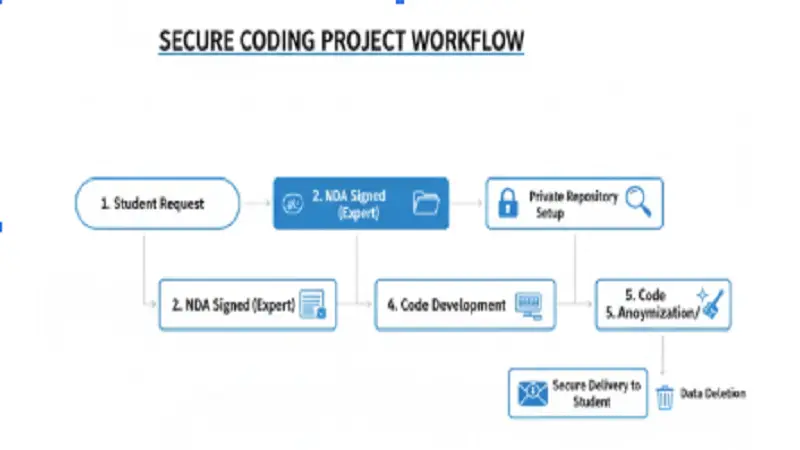
Coding and software development assignments present a unique set of challenges compared to standard essays. Code is functional; it is logic-based, and it often involves Intellectual Property (IP). When you are in the market for Programming Assignment Help, you must ensure that the code repository used during the development phase is strictly private. You cannot afford to have your custom solution floating around in public libraries like GitHub or Bitbucket where it can be indexed by search engines.
Before engaging with a technical expert, confirm that they are willing to work within a secure environment. This prevents your custom-built algorithms from being flagged for plagiarism by university software that scans public repositories. Furthermore, ensuring that the expert signs a digital Non-Disclosure Agreement (NDA) is a critical step. This legal barrier ensures that the logic and structure of your code remain your exclusive property, protecting your hard work from being repurposed or sold elsewhere.
 Understanding the Importance of Code Anonymization
When a professional writes code for you, it often includes comments, variable names, and documentation. Secure outsourcing involves “anonymizing” this code—ensuring that the coding style matches a neutral, professional standard rather than a specific individual’s recognizable “fingerprint.” In 2026, stylistic forensics are a real thing; professors can use software to see if the “handwriting” of your code matches your previous work. A high-quality service understands this and works with you to ensure the output is consistent with your learning level.
4 Pillars of a Safe Academic Partnership
To ensure you aren’t walking into a digital trap, you should evaluate every academic service against these four core pillars of security. If a service fails even one, it is time to look elsewhere.
1. Encrypted Communication and Payments
Never communicate through unencrypted channels like standard SMS or basic email if you can avoid it. Always use platforms that offer SSL-certified browsing (look for the padlock icon in your browser) and secure, third-party payment gateways like PayPal, Stripe, or Apple Pay. These gateways ensure that the service provider never actually “sees” your credit card numbers or banking passwords.
2. Anonymity of Experts and Clients
This is a two-way street. You should never have to provide your university login credentials, your full legal name, or your physical address to the person working on your project. Similarly, the expert should remain a professional entity to you. This boundary prevents personal bias and protects both parties from potential harassment or “doxing.”
3. IP Ownership and Finality
The terms of service should be crystal clear: once you have paid for the service, you own 100% of the final product. There should be no “usage rights” held by the writer. A safe service will provide you with a certificate of originality and a guarantee that the work will never be published in their own portfolio or sold to another student in the future.
4. Transparent Data Retention Policies
In the world of cybersecurity, “data that doesn’t exist cannot be stolen.” Ask the service about their data retention policy. Do they keep your files forever? Or do they delete them 30 days after the project is completed? The best providers follow a “minimalist” data approach—they keep your info only as long as necessary to handle any revisions, and then they wipe it from their servers to minimize the impact of any potential future breach.
The Role of “Human-Centric” Verification in 2026
With the rise of automated AI tools, the internet is flooded with low-quality, generic content. However, for a student to truly succeed, the work needs a human touch. This is where the concept of “Human-Centric” verification comes in. When you outsource, you aren’t just looking for a machine to spit out words; you are looking for a mentor to provide a structural framework.
A reputable service will have a multi-tier quality control process. First, the expert completes the task. Second, a separate quality assurance team checks it for technical accuracy and privacy compliance. Third, it is run through high-level plagiarism and AI-detection tools to ensure it meets the standard of “Original Work.” This human oversight is what differentiates a high-ranking academic support site from a “link farm” or a scam site.
Why Contextual Understanding Trumps Keywords
Search engines like Google have become incredibly smart. They no longer rank pages based on how many times a keyword appears. Instead, they rank based on the “intent” and “usefulness” of the content. For students, this means that the research they outsource must be contextually relevant to their specific syllabus and regional educational standards. Whether you are studying in the UK, the US, or Australia, the privacy laws (like GDPR or CCPA) and academic expectations differ. A secure, professional service adapts to these nuances.
Final Thoughts: Balancing Performance and Privacy
The pressure of modern academia isn’t going away. Assignments will get harder, and deadlines will get tighter. Using external help is a smart way to manage your mental health and ensure your GPA remains competitive. However, being a “smart student” in 2026 also means being a “secure student.”
By choosing platforms that prioritize data privacy, using encrypted communication, and ensuring your intellectual property is protected through NDAs, you can navigate your degree with confidence. Remember, a grade is temporary, but your digital identity is forever. Treat your data with the same respect you treat your education, and you will find that the path to success is not only faster but much safer.
Frequently Asked Questions
How can I verify if a research platform is secure? Look for “https” in the URL and a valid SSL certificate. Additionally, review the site’s privacy policy to ensure they do not sell user data to third parties and that they use end-to-end encryption for all file transfers.
Is it possible to maintain total anonymity while collaborating? Yes. High-quality services allow you to communicate with experts through a secure, internal dashboard. You should never be required to share your full legal name, university login credentials, or personal contact details.
What happens to my data after a project is completed? Reliable providers follow strict data retention policies, typically deleting your personal files and assignment drafts after a short buffer period (usually 30 days). This minimizes the risk of your information being exposed in a future data breach.
How is the ownership of the final work handled? Once the service is finalized and paid for, the intellectual property rights should transfer entirely to you. A professional agreement ensures the work is never reused, published, or shared with other individuals or databases.
About The Author
Ella Thompson is a dedicated academic consultant and researcher with a focus on education technology and student success strategies. Representing MyAssignmentHelp, Ella specializes in bridging the gap between complex digital requirements and high-level academic performance. With a commitment to data privacy and scholarly integrity, Ella provides students with the insights needed to navigate the evolving challenges of modern education.
See more: itwizzydigital