
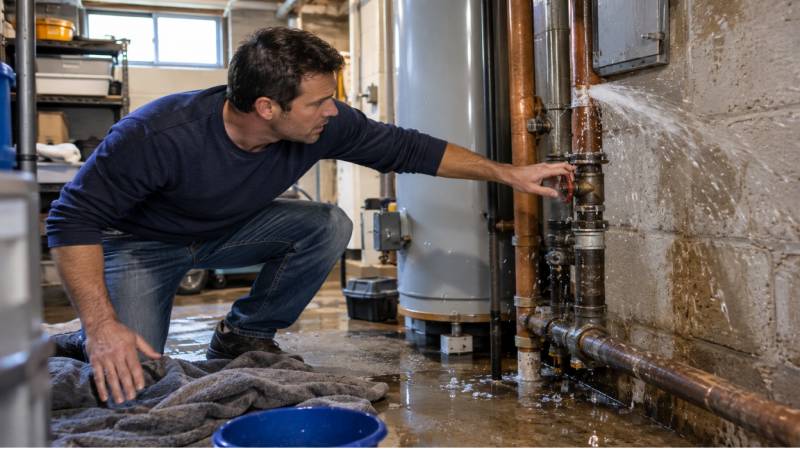
A quiet evening can go sideways fast when a pipe gives out. One second you’re settling in. The next, there’s water fanning across the floor and a knot forming in your stomach. Damage builds quickly, and it’s genuinely hard to think straight when you don’t know where to start. But if you own a home in Bergen County and you’re in the thick of it right now, take a breath. A handful of good decisions can spare you thousands of dollars and a whole lot of grief.
Below, you’ll find what to do the second you notice a burst pipe, how to size up the damage, and what happens once a professional steps in.
Immediate Steps to Take When a Pipe Bursts
The opening minutes matter more than anything that comes after. Right now, one thing tops the list: cut off the water.
Get to your main water supply and shut it off. That valve tends to live near your water meter, so start looking in the basement, a crawl space, or a utility closet. The moment it’s closed, the flooding stops, and you can finally think without gallons pouring in behind you.
Then find the burst pipe and take a few photos before you lay a hand on anything. That small step pays off later, once insurance paperwork enters the picture. One more thing: if water is sitting anywhere near outlets, appliances, or your electrical panel, kill the power to that part of the house. Water and electricity are a bad pairing, and this really isn’t the time to test your luck.
Dangers handled? Now call a licensed plumber. Burst pipes have an uncanny knack for striking at 2 a.m. on a holiday, which is exactly why a 24/7 plumber in Bergen County earns their keep. The quicker someone gets there, the less damage you’re likely left cleaning up.
Assessing the Damage
Water off, help on the way – this is your window to take stock. Walk the house and look hard at the ceilings, walls, and floors close to the break. Watch for discoloration, warping, and any spot that feels soft or spongy when you press on it.
Jot down what you notice and keep snapping photos as you move. Insurers ask for detailed evidence, and having it lined up early tends to move your claim through faster.
While you’re at it, try to work out where the failure happened. Main water line, or a smaller branch line? Main line breaks usually mean heavier water loss and a more pressing need for repair. That detail also helps your plumber judge whether this is a tonight problem or something that can hold for a day or two.
Professional Repair Options
Once your plumber shows up, expect a proper look-over first. They’ll inspect pipe joints, test water pressure, and check the materials around the break for any other weak points waiting to fail.
What comes next depends on what they find. The usual routes:
- Pipe patchingfor minor cracks
- Section replacementwhen the break is more serious
- Full repipingwhen the whole system is clearly worn out
Your plumber should walk you through the option that actually fits your home, not simply the most expensive line on the estimate.
Cost mostly comes down to timing and severity. After-hours emergency work tends to run higher than a repair booked during regular business hours. And if your pipes are old or keep acting up, replacing them may beat patching over time. Aging pipes have a habit of bursting again, and those repeat fixes stack up quietly until the bill stops looking small.
Take Action Before Small Leaks Become Big Problems
A burst pipe is stressful, no question – but you’re far from powerless. Shut off the water, document everything, and call a plumber you trust as soon as you can. Act fast, and you’ll protect your home, your budget, and a fair share of your peace of mind right along with them.See More