
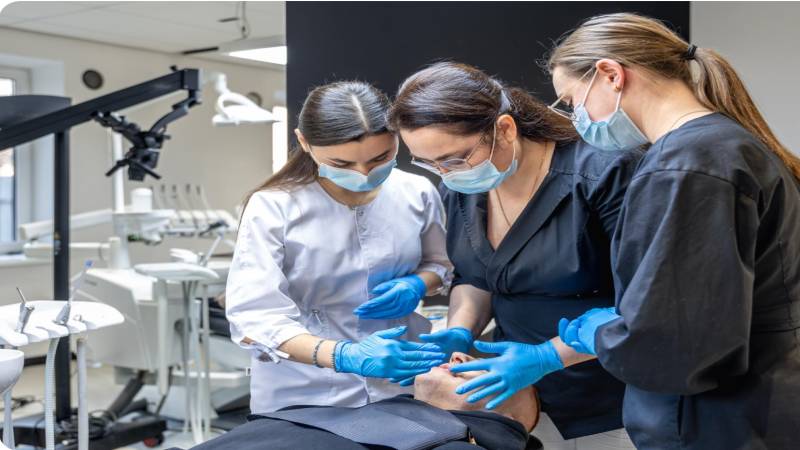
You may have been told that a canine tooth is stuck, delayed, or moving the wrong way, and now the plan suddenly sounds bigger than braces alone. That can feel like a lot. These teeth matter more than most people realize. They help guide your bite, support the shape of your smile, and sit in a part of the jaw where space is tight and roots are close together. When a canine does not come in properly, the fix often calls for more than routine orthodontic care, and in some cases may even involve treatment for temporomandibular joint disorder in New Braunfels.
Why oral surgeons are often needed for impacted canines comes down to access, safety, and precision. An impacted canine may be buried in bone, trapped under gum tissue, or positioned against the roots of nearby teeth. In many cases, the orthodontist plans the movement, and the oral surgeon exposes the tooth or removes obstacles so it can be guided into place. That team approach protects the surrounding teeth and gives the canine the best chance to erupt in a healthy position.
Impacted canines create problems that braces alone cannot always solve
Canines are often the last front teeth to come in, and they follow a long path through the jaw. If that path is blocked by crowding, baby teeth that did not fall out, extra teeth, cysts, or abnormal angulation, the canine can stay trapped. This is one reason impacted canine treatment often starts with imaging and a careful surgical plan instead of a simple adjustment to braces.
You might have noticed a baby tooth still in place long after the other adult teeth arrived. You may have seen a gap that never closed, swelling in the gums, or teeth shifting in a way that does not make sense. Sometimes there are no obvious symptoms at all. The problem shows up only on X rays, which is why orthodontic evaluation matters. MedlinePlus offers a helpful overview of orthodontic care and tooth alignment, including how bite problems are assessed and managed.
When an impacted canine is left alone, it can press against the roots of nearby teeth, damage them, or stay stuck for years. In some cases, the tooth fuses to bone and becomes much harder to move later. A child or adult may already feel stressed about treatment costs and timing, then hear that surgery is part of the plan. That reaction makes sense. The word surgery sounds heavy. In practice, the procedure is often focused and planned around one clear goal, which is to safely uncover or manage the tooth so the orthodontist can do the rest.
Oral surgeons handle the anatomy and surgical access behind impacted canine exposure
An oral surgeon is often brought in because the tooth is not sitting where a general dentist or orthodontist can simply reach it. The surgeon works with the bone, gum tissue, nerves, and neighboring roots. That matters when the canine lies high in the palate, deep in the upper jaw, or at an angle that puts nearby teeth at risk.
In many cases, the surgeon performs an exposure procedure. A small window is created in the gum, and sometimes a bit of bone is removed to uncover the tooth. An attachment may be bonded to the canine so the orthodontist can guide it down over time. If the position is poor or the tooth is causing harm, extraction may be the safer option. The exact plan depends on age, tooth position, root development, and whether the canine can be moved predictably.
The medical side matters too. Some impacted canines are linked with infection, cyst formation, or pain. MedlinePlus explains the basics of an impacted tooth and its possible complications, which helps explain why a specialist may be recommended instead of a wait and see approach.
This is where an oral surgeon and implant dentist may also discuss backup options if the canine cannot be saved. That does not mean the tooth is automatically lost. It means the team is thinking ahead and protecting your long term result instead of reacting late.
Oral surgery for impacted canines often works best as part of a team plan
The strongest outcomes usually come from coordination. The orthodontist maps the movement. The oral surgeon creates access and manages the surgical part. Timing matters. If a baby canine is removed early enough, a blocked adult canine may sometimes correct its path on its own. If the adult tooth is deeply impacted, guided eruption may need to start soon to avoid root damage to nearby incisors.
The University of Texas Health Science Center outlines how impacted canine treatment can involve surgical exposure and orthodontic traction. That combined approach is common because each provider handles a different part of the problem. One is moving teeth. The other is reaching a tooth that has not erupted normally.
| Situation | Orthodontist Alone | Orthodontist and Oral Surgeon |
| Mild delay with a clear eruption path | Monitoring, space creation, possible baby tooth removal | Usually not needed right away |
| Canine trapped under gum tissue | Cannot fully access buried tooth | Surgical exposure allows guided eruption |
| Canine blocked by bone or angled against nearby roots | Limited ability to solve safely with braces alone | Precise access reduces risk to adjacent teeth |
| Damage, cyst, or non restorable position | May identify the problem on imaging | Can remove the tooth and discuss replacement options |
The next steps for impacted canine care are clearer than they first seem
Get the right imaging. A panoramic X ray or 3D scan can show where the canine sits, how close it is to other roots, and whether bone removal or exposure is needed. Guessing wastes time.
Ask for a joint treatment plan. If you are seeing an orthodontist, ask whether the case needs an oral surgeon consult. If you are seeing a surgeon first, ask how the orthodontic phase will be coordinated. Oral surgery for impacted canines works best when both sides are planned together.
Do not wait if the tooth is threatening nearby roots. A delayed canine is not always an emergency, but root damage can become permanent. If imaging shows pressure on other teeth, move forward with the specialist evaluation promptly.
If you are dealing with a stuck canine, you are not overreacting by taking it seriously. These cases are common, treatable, and often very manageable once the right team is involved. A skilled oral surgeon and implant dentist can help create a path forward that protects your bite, your neighboring teeth, and your long term dental health.See More